
 Physical Therapy
 Occupational Therapy
 Skilled Nursing Care
 Wound Care
The person must be able to recognize and apply it within the routine; the therapist assesses that fit rather than adding reminders indiscriminately.
Memory Strategies Training at Home
A reminder works only if the person can notice, understand and use it. Memory-strategy training examines a particular daily routine and tests practical supports with the patient and caregiver, without presenting them as a cure for memory loss.
EXCELLENT



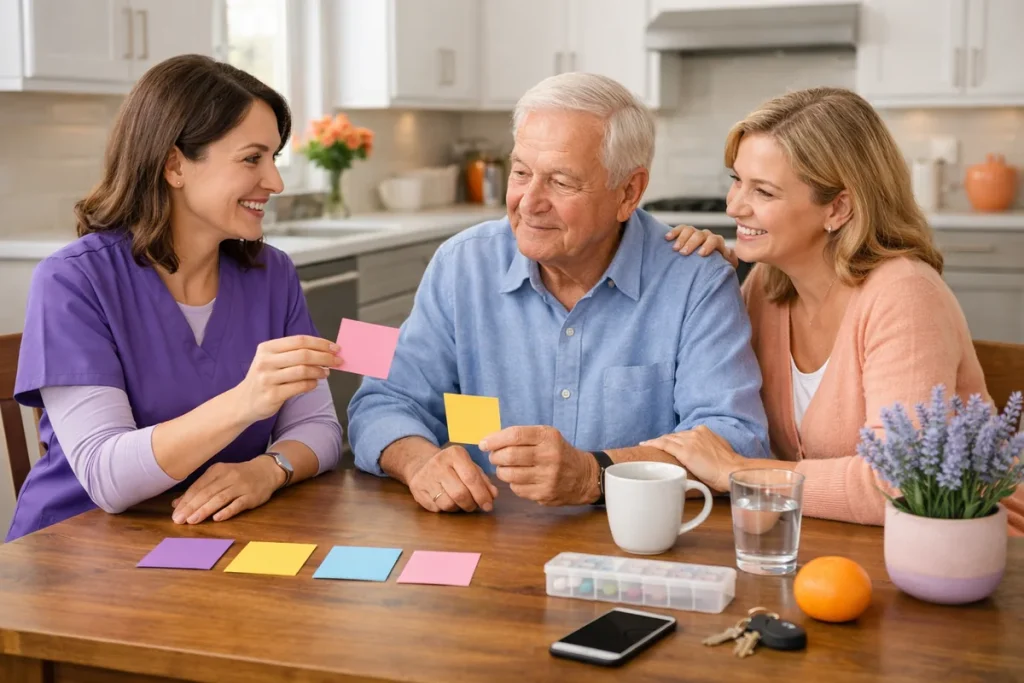
Memory Strategies Training at Home: an individual home care plan
A reminder works only if the person can notice, understand and use it. Memory-strategy training examines a particular daily routine and tests practical supports with the patient and caregiver, without presenting them as a cure for memory loss.
Routine-specific reminder review
Memory-strategy work starts with a recurring routine. The therapist asks what needs to be remembered, how the person currently attempts the task and what happens when it is missed. A calendar, checklist or electronic alert is only a possible tool; usefulness depends on whether the individual notices, understands and applies it.
Visual cue assessment
A strategy needs to fit the household as well as the patient. Consistent item placement or a simplified prompt may be considered, but adding more information can also make a routine harder to follow. The therapist can review the response with the caregiver and adjust the support according to the assessment.
Consistent item placement
Reminders do not establish independence or replace required supervision. Medication responsibilities, for example, need appropriate clinical review even when an alert is used. This service focuses on practical activity support, not reversing a progressive memory condition. Broader cognitive OT may address attention or organization when those needs extend beyond remembering a particular step.
Related care for memory strategies training at home
Cognitive Rehab at Home (OT). Cognitive Communication Therapy at Home.
Eligibility and insurance review
Original Medicare Part A & B may cover eligible home health care when the applicable homebound, skilled-care, clinician-order and certification requirements are met and services follow an individual plan through a Medicare-certified agency. Coverage and any patient responsibility require verification. Blue Shield of California PPO and Anthem Blue Cross PPO benefits are also reviewed individually. Equipment, medications and separately billed services require their own benefit review.
To discuss memory strategies training at home in Los Angeles County, contact HarvardCare Home Health with the current clinical instructions and the tasks that need support. Referring clinicians can use the patient referral page. Assessment, service availability and individual eligibility determine the next steps.
FAQs
Do you have questions?
Got questions about Memory Strategies Training at Home? Here are answers to what patients and families ask most.
No. A calendar does not establish safe independent functioning; supervision needs require individualized assessment.
Placement can be considered as part of an organized routine, but the strategy must be understandable and practical for the household.
It concentrates on remembering routine information or steps, while cognitive OT may address additional attention, planning and organization needs.
Yes. The therapist considers reading, attention and task demands before selecting the amount and format of information.
Report the difficulty so the strategy can be reassessed; adding louder or more frequent alerts is not automatically appropriate.
No. Medication responsibilities and supervision need clinical review; a reminder alone does not establish that a person can manage medications safely.
Follow the agreed words, setup and routine, and tell the team when the support is confusing or no longer useful.
No. It addresses practical activity support and does not promise to restore memory or change the underlying disease.
Choose a recurring difficulty, describe existing reminders and explain what happens when the person tries to complete the task.
TESTIMONIALS
What Our Patients & Families Say
EXCELLENT
AREAS WE SERVE
Memory Strategies Training at Home Near You
For memory strategies training at home, describe the care needs and home location to our intake team. The clinical plan, service availability and individual eligibility are reviewed before care is arranged.
Serving 279 service areas across Los Angeles County
- A
- Acton
- Adams-Normandie
- Agoura Hills
- Agua Dulce
- Alhambra
- Alondra Park
- Altadena
- Angelino Heights
- Arcadia
- Arleta
- Arlington Heights
- Artesia
- Arts District
- Atwater Village
- Avocado Heights
- Azusa
- B
- Baldwin Hills
- Baldwin Park
- Bassett
- Beachwood Canyon
- Bel Air
- Bell
- Bell Gardens
- Bellflower
- Beverly Crest
- Beverly Grove
- Beverly Hills
- Beverlywood
- Boyle Heights
- Bradbury
- Brentwood
- Broadway-Manchester
- Burbank
- C
- Calabasas
- Canoga Park
- Canyon Country
- Carson
- Carthay
- Castaic
- Castle Heights
- Central-Alameda
- Century City
- Cerritos
- Charter Oak
- Chatsworth
- Chesterfield Square
- Cheviot Hills
- Chinatown
- Citrus
- City Terrace
- Claremont
- Commerce
- Compton
- Country Club Park
- Covina
- Crenshaw
- Cudahy
- Culver City
- Cypress Park
- D
- Del Aire
- Del Rey
- Desert View Highlands
- Diamond Bar
- Downey
- Downtown Los Angeles
- Duarte
- E
- Eagle Rock
- East Hollywood
- East Los Angeles
- East Pasadena
- East Rancho Dominguez
- East San Gabriel
- East Whittier
- Echo Park
- El Camino Village
- El Monte
- El Segundo
- El Sereno
- Elysian Valley
- Encino
- Exposition Park
- F
- Fairfax
- Florence
- Florence-Firestone
- G
- Gardena
- Garvanza
- Glassell Park
- Glendale
- Glendora
- Gramercy Park
- Granada Hills
- Green Meadows
- H
- Hacienda Heights
- Hancock Park
- Harbor City
- Harbor Gateway
- Harvard Heights
- Harvard Park
- Hasley Canyon
- Hawaiian Gardens
- Hawthorne
- Hermon
- Hermosa Beach
- Hidden Hills
- Highland Park
- Historic Filipinotown
- Hollywood
- Hollywood Hills
- Holmby Hills
- Huntington Park
- Hyde Park
- I
- Inglewood
- J
- Jefferson Park
- K
- Kinneloa Mesa
- Koreatown
- L
- La Cañada Flintridge
- La Crescenta-Montrose
- La Habra Heights
- La Mirada
- La Puente
- La Verne
- Ladera Heights
- Lake Balboa
- Lake Hughes
- Lake Los Angeles
- Lake View Terrace
- Lakewood
- Lancaster
- Larchmont
- Lawndale
- Leimert Park
- Lennox
- Leona Valley
- Lincoln Heights
- Little Armenia
- Little Tokyo
- Littlerock
- Lomita
- Long Beach
- Los Angeles
- Los Feliz
- Lynwood
- M
- Malibu
- Manchester Square
- Manhattan Beach
- Mar Vista
- Marina del Rey
- Mayflower Village
- Maywood
- Mid-City
- Mid-Wilshire
- Miracle Mile
- Mission Hills
- Monrovia
- Montebello
- Montecito Heights
- Monterey Park
- Mt Washington
- N
- Newhall
- NoHo Arts District
- North El Monte
- North Hills
- North Hollywood
- North Long Beach
- Northridge
- Norwalk
- P
- Pacific Palisades
- Pacoima
- Palmdale
- Palms
- Palos Verdes Estates
- Palos Verdes Peninsula
- Panorama City
- Paramount
- Park La Brea
- Pasadena
- Pearblossom
- Pico Rivera
- Pico-Robertson
- Pico-Union
- Playa del Rey
- Playa Vista
- Pomona
- Porter Ranch
- Q
- Quartz Hill
- R
- Rancho Dominguez
- Rancho Palos Verdes
- Rancho Park
- Redondo Beach
- Reseda
- Rolling Hills
- Rolling Hills Estates
- Rosemead
- Rowland Heights
- S
- San Dimas
- San Fernando
- San Gabriel
- San Marino
- San Pasqual
- San Pedro
- Santa Clarita
- Santa Fe Springs
- Santa Monica
- Saugus
- Sawtelle
- Sepulveda
- Shadow Hills
- Sherman Oaks
- Sherman Village
- Sherwood Forest
- Sierra Madre
- Signal Hill
- Silver Lake
- South Central
- South El Monte
- South Gate
- South Park
- South Pasadena
- South San Gabriel
- South San Jose Hills
- South Whittier
- Stevenson Ranch
- Stonehurst
- Studio City
- Sun Valley
- Sun Village
- Sunland
- Sunset Park
- Sylmar
- T
- Tarzana
- Temple City
- Thai Town
- Toluca Lake
- Topanga
- Torrance
- Tujunga
- U
- University Hills
- University Park
- V
- Val Verde
- Valencia
- Valinda
- Valley Glen
- Valley Village
- Van Nuys
- Venice
- Vermont Knolls
- Vermont Square
- Vermont Vista
- Vermont-Slauson
- Victor Heights
- View Park-Windsor Hills
- Vincent
- W
- Walnut
- Walnut Park
- Watts
- West Adams
- West Athens
- West Carson
- West Covina
- West Hills
- West Hollywood
- West Los Angeles
- West Puente Valley
- West Rancho Dominguez
- West Whittier-Los Nietos
- Westchester
- Westlake
- Westlake Village
- Westmont
- Westwood
- Westwood Village
- Whitley Heights
- Whittier
- Willowbrook
- Wilmington
- Wilshire Center
- Windsor Square
- Winnetka
- Woodland Hills
More Services
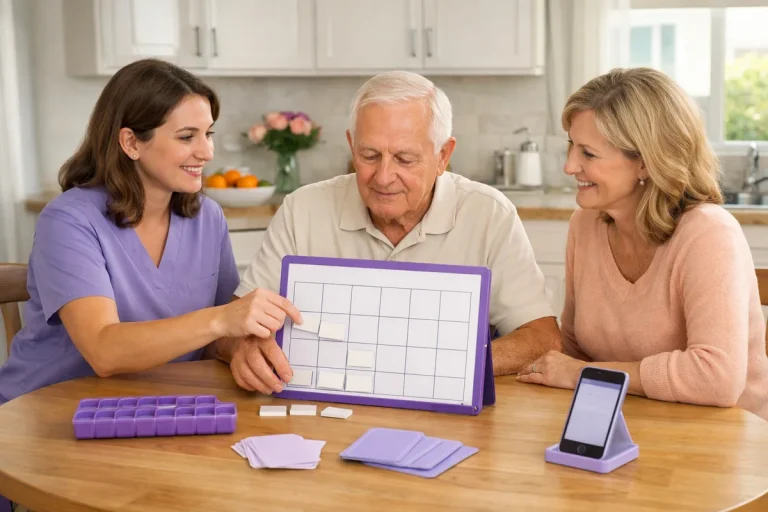
Cognitive Rehab at Home (OT)
- Task-sequencing assessment
- Attention during activities
- Routine and cue strategies
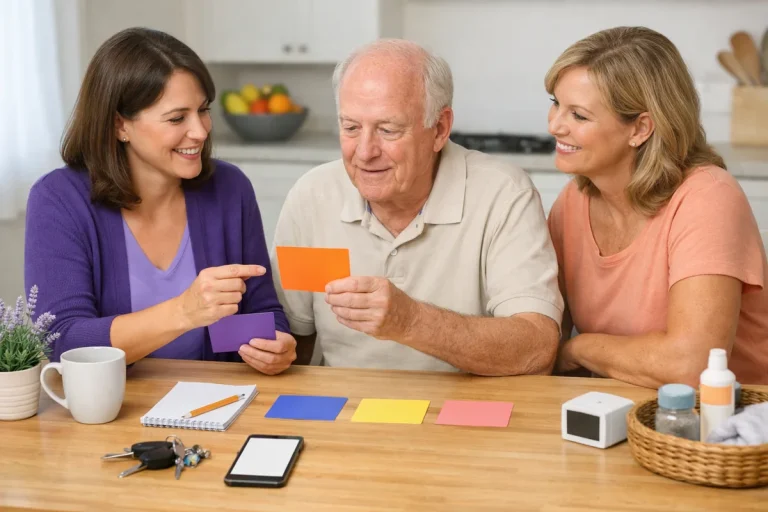
Cognitive Communication Therapy at Home
- Attention in communication
- Message organization
- Functional memory supports
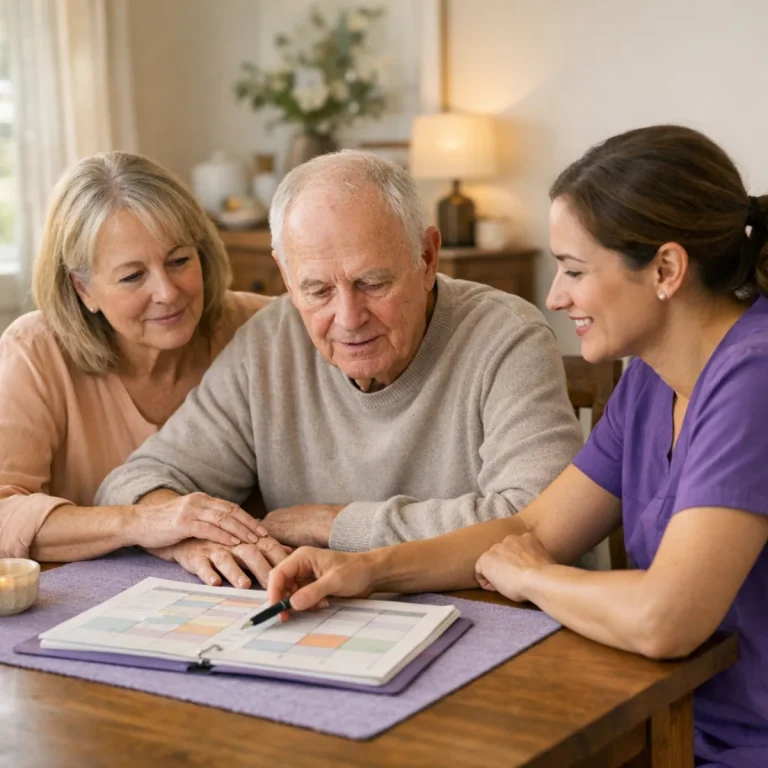
Dementia Care at Home
- Individual functional assessment
- Daily-task adaptation
- Caregiver assistance review