
 Physical Therapy
 Occupational Therapy
 Skilled Nursing Care
 Wound Care
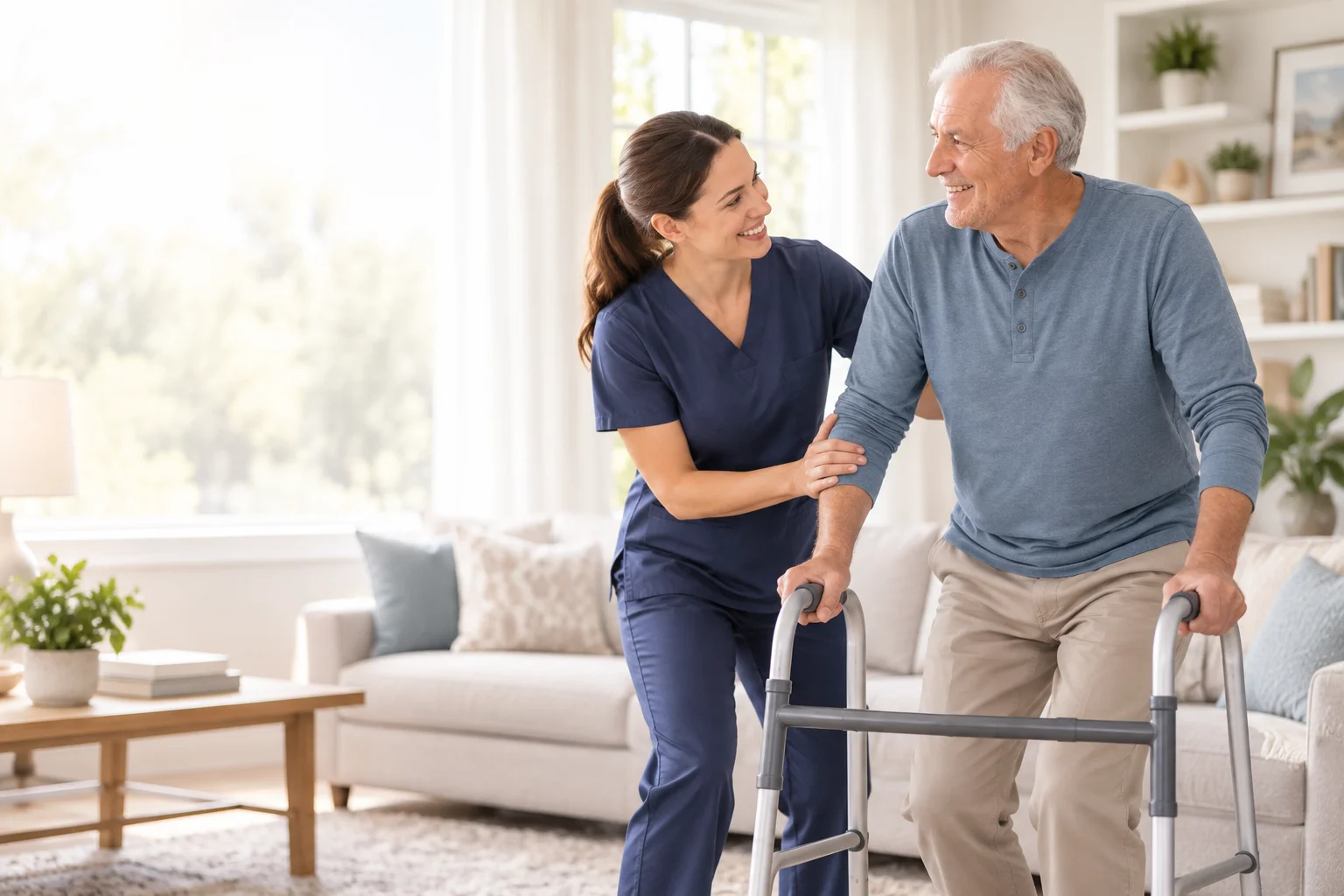
In-Home Physical Therapy in West Puente Valley, CA
- Serving all West Puente Valley areas
- Bilingual visits available
- Licensed physical therapists
- Original Medicare Part A & B / Blue Shield of California PPO / Anthem Blue Cross PPO — eligibility verified
In-Home Physical Therapy in West Puente Valley
West Puente Valley is an unincorporated community along the Puente Avenue and Francisquito Avenue corridors, through the Vineland and Fairgrove neighborhoods, and across the blocks below Valley Boulevard and the San Bernardino Freeway. The housing is small postwar single-story homes on flat lots. Some of the patients we are asked to see here are not going to walk again, and how a therapist handles that determines whether the family gets something useful or a course of false hope. Our licensed physical therapists are direct about it.
Our therapists serve all West Puente Valley residential streets, the Puente Avenue and Francisquito Avenue corridors, the Vineland Avenue and Fairgrove Avenue neighborhoods, the blocks below Valley Boulevard and the San Bernardino Freeway, and the homes along the surrounding streets.
When Walking Is Not the Goal
For a patient who is bed-bound or chair-bound after a severe stroke, advanced neurological disease, or a long decline, a program built around walking sets everyone up to fail. There is still a great deal of valuable work, and it is not a consolation prize — it is what determines comfort, dignity, and whether care at home remains possible.
That work is specific. Joint range maintained so that limbs do not stiffen into positions that make dressing and washing painful. Positioning in bed and in a chair that distributes pressure and supports posture rather than letting someone slide. A transfer that one person can perform safely, because a transfer requiring two people is a transfer that will be attempted by one. Repositioning schedules the household can actually keep. And training the family to do all of it without injuring themselves, which is the single most common reason a patient ends up leaving home.
We say plainly what we expect to change and what we do not, and we set goals that can be met. We will not promise walking to a family that wants to hear it, and we will not withhold effort from a patient who might regain more than expected — the measurements at each visit, not our opinion, decide which situation we are in.
What the Evaluation Covers
Your therapist measures joint range, strength where it can be measured, sitting balance and tolerance, and transfer ability, then measures the home: bed height and access from both sides, turning space for a chair or lift, doorway widths, the bathroom, and the route out of the house. Medications, blood pressure response to position change, skin condition, and the household’s capacity to assist are reviewed.
Conditions We Treat at Home
- Positioning, joint range, and contracture prevention
- Single-person transfer training for the household
- Recovery after severe stroke and advanced neurological conditions
- Weakness and deconditioning after a hospital stay
- Recovery after knee, hip, and shoulder replacement or repair
- Balance deficits and fall prevention
- Caregiver training and support, in Spanish or English
Protecting the Caregiver
In households like these the family member doing the lifting is usually the reason the patient is still at home, and they are usually the one at greatest risk of injury. We train transfers properly, insist on equipment where equipment is what the situation needs, and are honest when the answer is that more help is required rather than better technique. Where that is the case we ask your physician for a medical social work referral, which our agency provides, and for home health aide support where it would make the difference. Nobody volunteers those options, so we do.
Coordination With Your Physicians
We coordinate with Kindred Hospital Baldwin Park, Emanate Health Queen of the Valley Hospital, Kaiser Permanente Baldwin Park Medical Center, Kindred Hospital San Gabriel Valley, Greater El Monte Community Hospital, and Emanate Health Inter-Community Hospital. Your physician receives objective measurements and progress notes after visits.
West Puente Valley Areas We Serve
- All West Puente Valley residential streets
- Puente Avenue and Francisquito Avenue corridors
- Vineland Avenue and Fairgrove Avenue neighborhoods
- Blocks below Valley Boulevard and the San Bernardino Freeway
- Homes along the surrounding streets
Starting Physical Therapy Services
Home physical therapy requires a physician order documenting medical necessity. Medicare may cover in-home physical therapy if you qualify, which generally requires a physician order, a skilled therapy need, and homebound status as Medicare defines it. What you pay depends on your specific plan, and coverage is not guaranteed in advance. We accept Original Medicare Part A & B, Blue Shield of California PPO, and Anthem Blue Cross PPO.
Our intake team verifies your coverage and explains your benefits in Spanish or English before services begin, and we can contact your physician’s office directly to request the order.
WHY CHOOSE HarvardCare Home Health
The right care for your loved ones
Your family deserves trusted, professional care at home. Our dedicated team of certified nurses and therapists provides personalized treatment with the attention and respect your loved ones deserve.
Physical therapy within coordinated home health care
Licensed clinicians and individualized care plans
Visits arranged around assessed needs and availability
Care coordinated with your treating provider
Caregiver education, with patient consent


Areas We Serve Near West Puente Valley
FAQs
Do you have questions?
Have questions about in-home physical therapy in West Puente Valley? Find answers below or reach out to our team anytime — we're here to help.
All residential streets, the Puente Avenue and Francisquito Avenue corridors, the Vineland and Fairgrove neighborhoods, the blocks below Valley Boulevard and the San Bernardino Freeway, and the surrounding streets.
Yes, and not as a consolation. Maintaining joint range so limbs do not stiffen into positions that make washing and dressing painful, positioning that supports posture, and a transfer one person can do safely are what keep care at home possible.
We will say what we expect to change and what we do not, and set goals that can be met. We will not promise walking because a family wants to hear it, and the measurements at each visit rather than our opinion decide what is realistic.
Directly. We train transfers properly, insist on equipment where that is what the situation needs, and say honestly when the answer is more help rather than better technique — then ask your physician for social work or aide support.
Yes. A goal may focus on safer repositioning, contributing more to a transfer, maintaining movement, or reducing the effort required from a caregiver. The therapist can discuss what is realistic after assessment. Therapy goals do not have to depend on recovering independent walking.
TESTIMONIALS
What families tell us about our care in West Puente Valley
EXCELLENT


NEARBY HEALTHCARE RESOURCES
West Puente Valley Healthcare Resources
Listed for patient convenience. No formal affiliation implied.