
 Physical Therapy
 Occupational Therapy
 Skilled Nursing Care
 Wound Care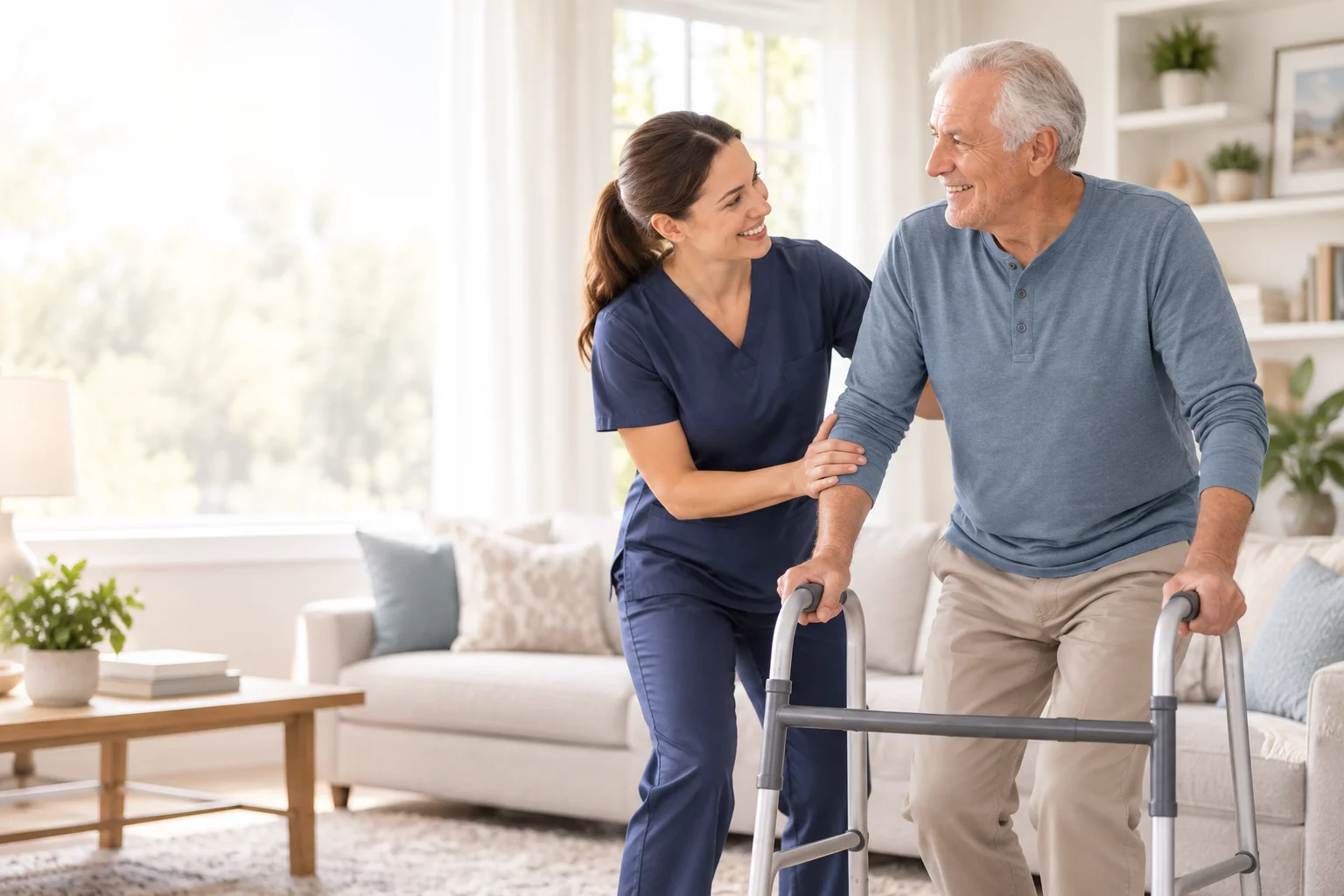
In-Home Physical Therapy in Elysian Valley, CA
- Serving all Elysian Valley areas
- Flexible scheduling options
- Licensed physical therapists
- Original Medicare Part A & B / Blue Shield of California PPO / Anthem Blue Cross PPO — eligibility verified
In-Home Physical Therapy in Elysian Valley
Elysian Valley is a narrow strip of houses pressed between the Los Angeles River and the 5 Freeway — Blake Avenue and Ripple Street at one end, Knox, Gilroy, and Dorris Place through the middle, Oros Street and Steelhead Park along the river, and Riverside Drive and the Fletcher Drive area at the edges. The neighborhood is only a couple of blocks wide, the houses are small and close together, and at the end of many streets there is a gate onto the river path. Our licensed physical therapists treat that path as a genuine clinical asset, because very few neighborhoods have anything like it.
Our therapists serve all Elysian Valley residential streets, Blake Avenue and Ripple Street, Knox Avenue, Gilroy Street, and Dorris Place, Oros Street and the blocks near Steelhead Park, and Riverside Drive and the Fletcher Drive area.
A Continuous, Level, Measurable Route
Outdoor gait training usually fights the environment: broken sidewalks, driveway aprons, curbs, cross traffic, and a route that runs out after a hundred feet. The river path has none of that. It is paved, level, uninterrupted for miles, and has no cross traffic at all, which makes it the most useful piece of ground in the neighborhood for rebuilding walking distance.
We use it in stages. Your therapist first checks the access gate at the end of your street — the ramp grade, the width, whether it is latched — because that is the part that fails. Then distance is built in measured increments with a fixed turnaround, and the return leg is planned as part of the effort rather than as an afterthought. The path is short on shade and seating, so early sessions are timed for morning and kept deliberately short, and we tell you the distance and gait speed each visit rather than asking how it felt.
What the Evaluation Covers
Your therapist measures strength, joint range of motion, standing balance, and gait speed, then measures the setting: the entry steps, doorway widths against your device, furniture and bed heights, the bathroom transfer, the distance from your door to the river gate, and the ramp at that gate. Medications, blood pressure response to standing, and fall history are reviewed.
Conditions We Treat at Home
- Graded distance and endurance programs on level ground
- Recovery after knee, hip, and shoulder replacement or repair
- Balance deficits and fall prevention
- Gait retraining after stroke or with Parkinson’s disease
- Weakness and deconditioning after a hospital stay
- Mobility training in small, tightly built homes
- Caregiver training for the household, in Spanish or English
Small Houses, Tight Quarters
Indoors, the constraint is space. Houses here are compact and many have a rear unit or a converted room behind them, which means short interior distances, narrow passages, and small bathrooms where a standard transfer technique does not fit. We measure the rooms and teach transfers sized to them, and we are careful about a particular trap: a patient who functions well in a small house can be quietly losing walking tolerance because nothing indoors ever demands more than fifteen feet. That is why the outdoor measurement matters, and why we take it deliberately.
Coordination With Your Physicians
We coordinate with Barlow Respiratory Hospital, Glendale Memorial Hospital and Health Center, CHA Hollywood Presbyterian Medical Center, Kaiser Permanente Los Angeles Medical Center, and Los Angeles General Medical Center. Your physician receives objective measurements and progress notes after visits.
Elysian Valley Areas We Serve
- All Elysian Valley residential streets
- Blake Avenue and Ripple Street
- Knox Avenue, Gilroy Street, and Dorris Place
- Oros Street and the blocks near Steelhead Park
- Riverside Drive and the Fletcher Drive area
Starting Physical Therapy Services
Home physical therapy requires a physician order documenting medical necessity. Medicare may cover in-home physical therapy if you qualify, which generally requires a physician order, a skilled therapy need, and homebound status as Medicare defines it. What you pay depends on your specific plan, and coverage is not guaranteed in advance. We accept Original Medicare Part A & B, Blue Shield of California PPO, and Anthem Blue Cross PPO.
Our intake team verifies your coverage and explains your benefits in Spanish or English before services begin, and we can contact your physician’s office directly to request the order.
WHY CHOOSE HarvardCare Home Health
The right care for your loved ones
Your family deserves trusted, professional care at home. Our dedicated team of certified nurses and therapists provides personalized treatment with the attention and respect your loved ones deserve.
Physical therapy within coordinated home health care
Licensed clinicians and individualized care plans
Visits arranged around assessed needs and availability
Care coordinated with your treating provider
Caregiver education, with patient consent



Areas We Serve Near Elysian Valley
FAQs
Do you have questions?
Have questions about in-home physical therapy in Elysian Valley? Find answers below or reach out to our team anytime — we're here to help.
All residential streets — Blake Avenue and Ripple Street, Knox Avenue, Gilroy Street, and Dorris Place, Oros Street and the blocks near Steelhead Park, and Riverside Drive and the Fletcher Drive area.
Yes, deliberately. It is paved, level, uninterrupted, and has no cross traffic, which makes it the best ground in the neighborhood for rebuilding walking distance. We check the access gate at the end of your street first, since that is the part that usually fails.
It is a planning constraint, not a disqualifier. Early sessions are timed for the morning, kept deliberately short, and the return leg is planned as part of the effort rather than as an afterthought.
Yes. We measure the rooms and teach transfers sized to them — and we watch for a specific trap, where someone functions well indoors while quietly losing walking tolerance because nothing inside ever demands more than fifteen feet.
Yes. A walking goal should include the return trip, not just the distance away from home. The therapist can discuss turnaround points, rest opportunities, assistance, and signs that the route is too demanding. Tell them if you routinely feel much more tired on the way back.
TESTIMONIALS
What families tell us about our care in Elysian Valley
EXCELLENT


NEARBY HEALTHCARE RESOURCES
Elysian Valley Healthcare Resources
Listed for patient convenience. No formal affiliation implied.