
 Physical Therapy
 Occupational Therapy
 Skilled Nursing Care
 Wound Care
No. Balance demands vary across sitting, standing and movement tasks. The therapist selects assessment and practice that fit the person's abilities and relevant clinical restrictions.
Balance Therapy at Home
Balance is used while sitting forward, standing to reach and changing direction. Home balance therapy studies the control needed for these tasks, with the therapist selecting the challenge and support according to the patient's assessment.
EXCELLENT



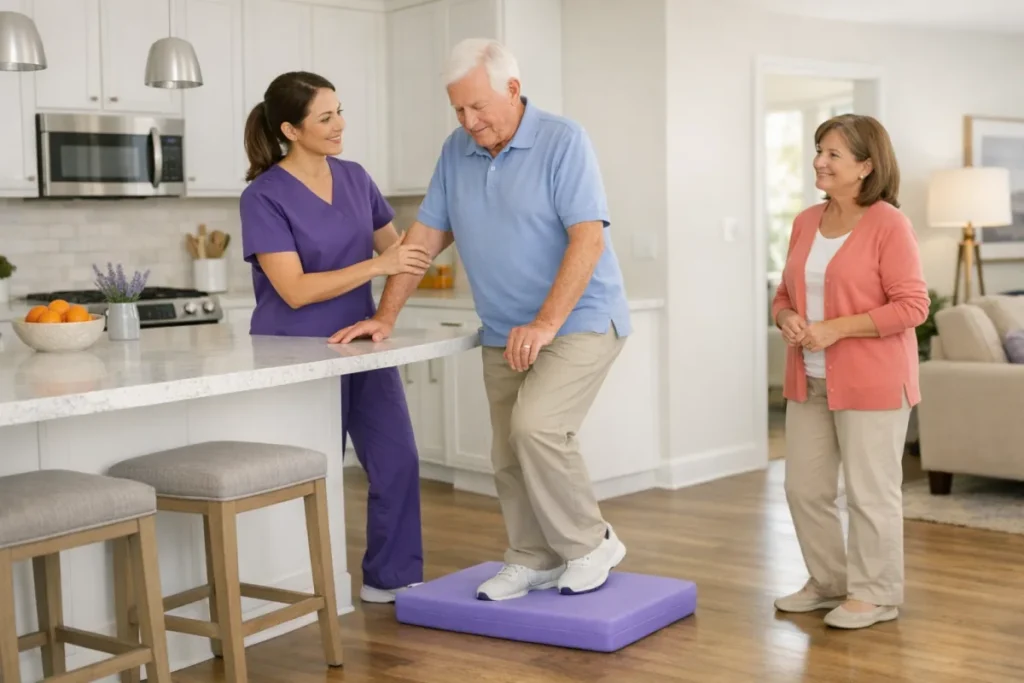
Balance Therapy at Home: an individual home care plan
Balance is used while sitting forward, standing to reach and changing direction. Home balance therapy studies the control needed for these tasks, with the therapist selecting the challenge and support according to the patient's assessment.
Sitting and standing control
Balance involves controlling the body over its available support. That control is used in sitting as well as standing, and during reaches, transfers and turns. A therapist selects relevant assessment tasks according to the person's condition rather than beginning with a challenging exercise intended for someone else.
Reach and weight-shift assessment
The support used during a task matters. A therapist may guard an activity, select a stable surface or limit a movement according to the assessment. These choices are part of the treatment, not optional details. A family member who sees a task performed during a visit should not assume that it is appropriate to repeat alone or with additional distractions.
Guarded task practice
Balance treatment and fall-prevention planning overlap but are not identical. Balance therapy concentrates on postural control during selected activities; a broader fall review may involve circumstances, environment and clinical concerns outside that focus. Dizziness or another new symptom needs appropriate review. The plan addresses individual needs without promising that balance exercises remove every risk of falling.
Related care for balance therapy at home
Balance & Fall Prevention Therapy. Fall Risk Assessment at Home.
Eligibility and insurance review
Original Medicare Part A & B may cover eligible home health care when the applicable homebound, skilled-care, clinician-order and certification requirements are met and services follow an individual plan through a Medicare-certified agency. Coverage and any patient responsibility require verification. Blue Shield of California PPO and Anthem Blue Cross PPO benefits are also reviewed individually. Equipment, medications and separately billed services require their own benefit review.
To discuss balance therapy at home in Los Angeles County, contact HarvardCare Home Health with the current clinical instructions and the tasks that need support. Referring clinicians can use the patient referral page. Assessment, service availability and individual eligibility determine the next steps.
FAQs
Do you have questions?
Got questions about Balance Therapy at Home? Here are answers to what patients and families ask most.
Reaching changes how the body is supported and controlled. For some patients, seated balance relates directly to dressing, transfers or reaching an item beside the bed.
It considers how a person transfers weight while maintaining appropriate control. The method and level of support are selected clinically; it is not an exercise to copy without assessment.
A support surface is only one factor. The therapist still considers strength, sensation, cognition, restrictions and the help needed before assigning a balance activity.
Balance therapy focuses on postural control during selected tasks. A fall-prevention review may also examine the circumstances of falls, home hazards and other contributors requiring coordination.
Follow the specified supervision and assistance instructions. A task performed with a therapist guarding may be inappropriate to attempt without that support.
It can alter the demands of movement, but the therapist determines whether and how to assess that challenge. Do not add distractions or head movements to an assigned activity on your own.
Pause according to the plan and report the change to the treating team. Dizziness needs appropriate assessment and should not automatically be treated as a balance-training challenge to overcome.
Describe the position, movement and assistance needed when the person becomes unsteady. Concrete observations help the therapist choose relevant assessment tasks.
No. Balance practice cannot eliminate every cause of a fall. The team reviews individual risks and practical support needs without promising that falls will be prevented.
TESTIMONIALS
What Our Patients & Families Say
EXCELLENT
AREAS WE SERVE
Balance Therapy at Home Near You
For balance therapy at home, describe the care needs and home location to our intake team. The clinical plan, service availability and individual eligibility are reviewed before care is arranged.
Serving 279 service areas across Los Angeles County
- A
- Acton
- Adams-Normandie
- Agoura Hills
- Agua Dulce
- Alhambra
- Alondra Park
- Altadena
- Angelino Heights
- Arcadia
- Arleta
- Arlington Heights
- Artesia
- Arts District
- Atwater Village
- Avocado Heights
- Azusa
- B
- Baldwin Hills
- Baldwin Park
- Bassett
- Beachwood Canyon
- Bel Air
- Bell
- Bell Gardens
- Bellflower
- Beverly Crest
- Beverly Grove
- Beverly Hills
- Beverlywood
- Boyle Heights
- Bradbury
- Brentwood
- Broadway-Manchester
- Burbank
- C
- Calabasas
- Canoga Park
- Canyon Country
- Carson
- Carthay
- Castaic
- Castle Heights
- Central-Alameda
- Century City
- Cerritos
- Charter Oak
- Chatsworth
- Chesterfield Square
- Cheviot Hills
- Chinatown
- Citrus
- City Terrace
- Claremont
- Commerce
- Compton
- Country Club Park
- Covina
- Crenshaw
- Cudahy
- Culver City
- Cypress Park
- D
- Del Aire
- Del Rey
- Desert View Highlands
- Diamond Bar
- Downey
- Downtown Los Angeles
- Duarte
- E
- Eagle Rock
- East Hollywood
- East Los Angeles
- East Pasadena
- East Rancho Dominguez
- East San Gabriel
- East Whittier
- Echo Park
- El Camino Village
- El Monte
- El Segundo
- El Sereno
- Elysian Valley
- Encino
- Exposition Park
- F
- Fairfax
- Florence
- Florence-Firestone
- G
- Gardena
- Garvanza
- Glassell Park
- Glendale
- Glendora
- Gramercy Park
- Granada Hills
- Green Meadows
- H
- Hacienda Heights
- Hancock Park
- Harbor City
- Harbor Gateway
- Harvard Heights
- Harvard Park
- Hasley Canyon
- Hawaiian Gardens
- Hawthorne
- Hermon
- Hermosa Beach
- Hidden Hills
- Highland Park
- Historic Filipinotown
- Hollywood
- Hollywood Hills
- Holmby Hills
- Huntington Park
- Hyde Park
- I
- Inglewood
- J
- Jefferson Park
- K
- Kinneloa Mesa
- Koreatown
- L
- La Cañada Flintridge
- La Crescenta-Montrose
- La Habra Heights
- La Mirada
- La Puente
- La Verne
- Ladera Heights
- Lake Balboa
- Lake Hughes
- Lake Los Angeles
- Lake View Terrace
- Lakewood
- Lancaster
- Larchmont
- Lawndale
- Leimert Park
- Lennox
- Leona Valley
- Lincoln Heights
- Little Armenia
- Little Tokyo
- Littlerock
- Lomita
- Long Beach
- Los Angeles
- Los Feliz
- Lynwood
- M
- Malibu
- Manchester Square
- Manhattan Beach
- Mar Vista
- Marina del Rey
- Mayflower Village
- Maywood
- Mid-City
- Mid-Wilshire
- Miracle Mile
- Mission Hills
- Monrovia
- Montebello
- Montecito Heights
- Monterey Park
- Mt Washington
- N
- Newhall
- NoHo Arts District
- North El Monte
- North Hills
- North Hollywood
- North Long Beach
- Northridge
- Norwalk
- P
- Pacific Palisades
- Pacoima
- Palmdale
- Palms
- Palos Verdes Estates
- Palos Verdes Peninsula
- Panorama City
- Paramount
- Park La Brea
- Pasadena
- Pearblossom
- Pico Rivera
- Pico-Robertson
- Pico-Union
- Playa del Rey
- Playa Vista
- Pomona
- Porter Ranch
- Q
- Quartz Hill
- R
- Rancho Dominguez
- Rancho Palos Verdes
- Rancho Park
- Redondo Beach
- Reseda
- Rolling Hills
- Rolling Hills Estates
- Rosemead
- Rowland Heights
- S
- San Dimas
- San Fernando
- San Gabriel
- San Marino
- San Pasqual
- San Pedro
- Santa Clarita
- Santa Fe Springs
- Santa Monica
- Saugus
- Sawtelle
- Sepulveda
- Shadow Hills
- Sherman Oaks
- Sherman Village
- Sherwood Forest
- Sierra Madre
- Signal Hill
- Silver Lake
- South Central
- South El Monte
- South Gate
- South Park
- South Pasadena
- South San Gabriel
- South San Jose Hills
- South Whittier
- Stevenson Ranch
- Stonehurst
- Studio City
- Sun Valley
- Sun Village
- Sunland
- Sunset Park
- Sylmar
- T
- Tarzana
- Temple City
- Thai Town
- Toluca Lake
- Topanga
- Torrance
- Tujunga
- U
- University Hills
- University Park
- V
- Val Verde
- Valencia
- Valinda
- Valley Glen
- Valley Village
- Van Nuys
- Venice
- Vermont Knolls
- Vermont Square
- Vermont Vista
- Vermont-Slauson
- Victor Heights
- View Park-Windsor Hills
- Vincent
- W
- Walnut
- Walnut Park
- Watts
- West Adams
- West Athens
- West Carson
- West Covina
- West Hills
- West Hollywood
- West Los Angeles
- West Puente Valley
- West Rancho Dominguez
- West Whittier-Los Nietos
- Westchester
- Westlake
- Westlake Village
- Westmont
- Westwood
- Westwood Village
- Whitley Heights
- Whittier
- Willowbrook
- Wilmington
- Wilshire Center
- Windsor Square
- Winnetka
- Woodland Hills
More Services
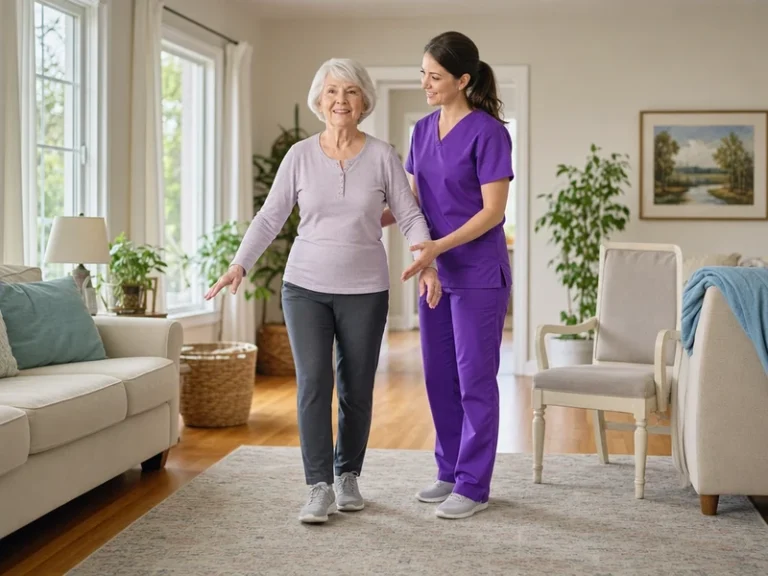
Balance & Fall Prevention Therapy
- Fall-history review
- Balance during daily tasks
- Turning and reach assessment
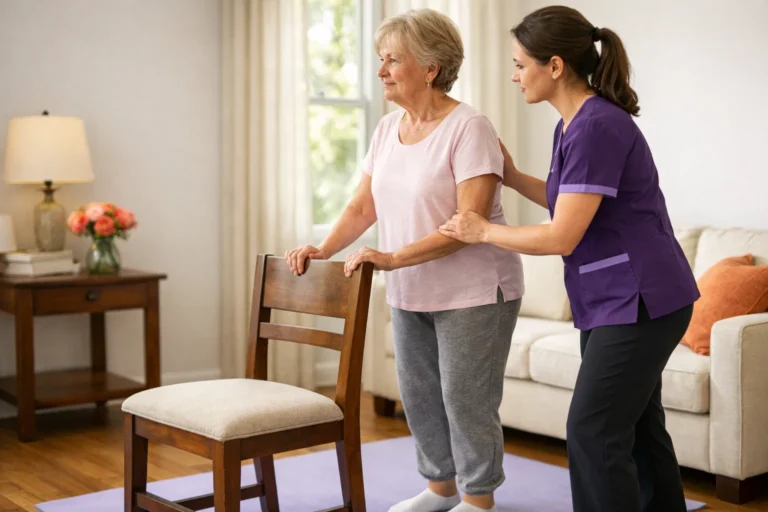
Fall Risk Assessment at Home
- Daily-task risk review
- Environmental assessment
- Equipment-use observation
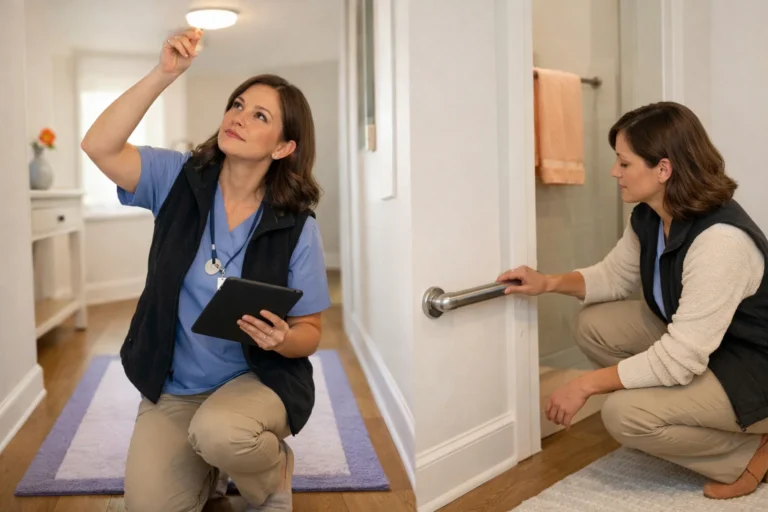
Home Safety Evaluation
- Room and route review
- Task-specific safety assessment
- Access recommendations