
 Physical Therapy
 Occupational Therapy
 Skilled Nursing Care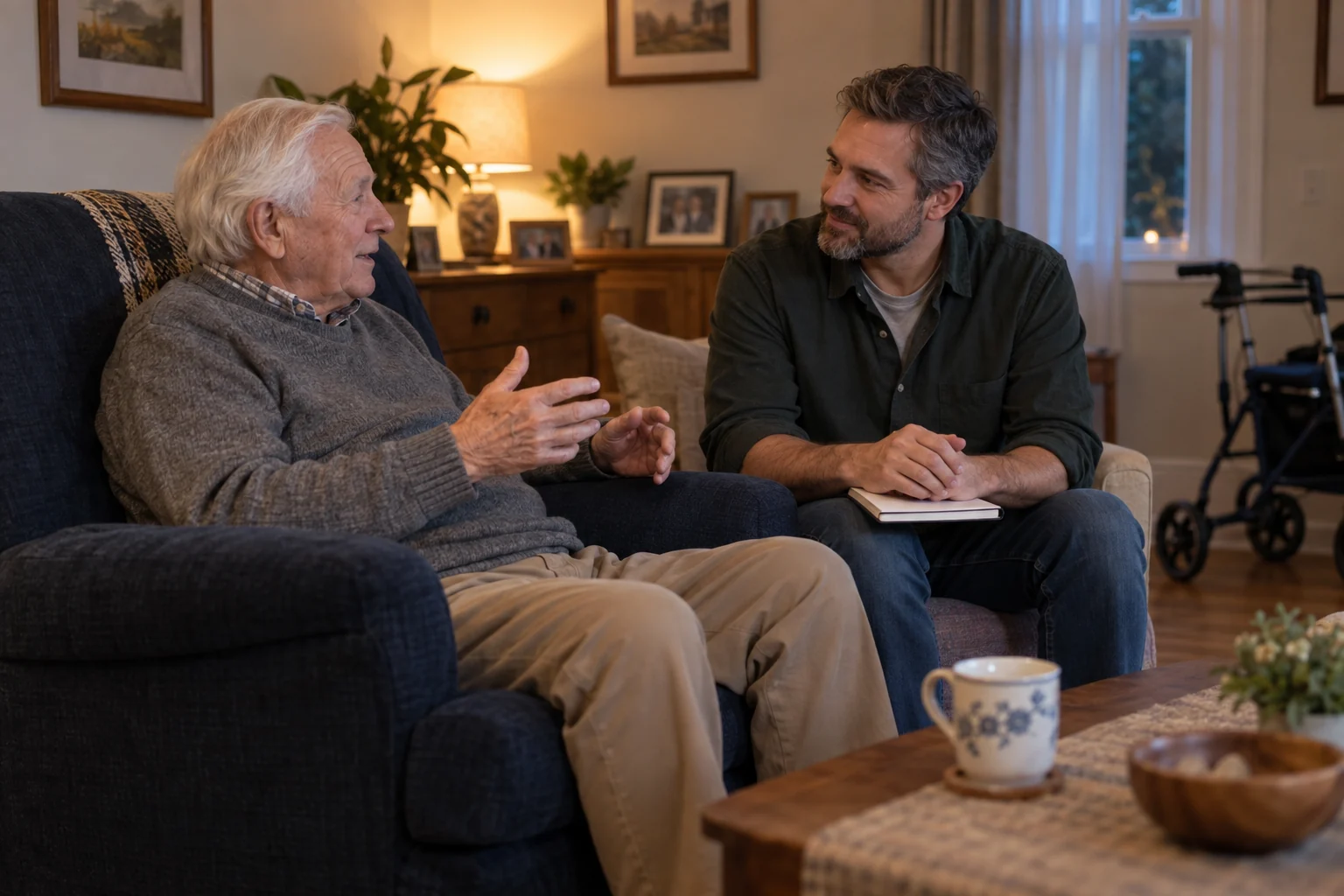

When walking or moving between surfaces seems different, it can be hard to explain exactly what changed. “Getting around is harder” describes a concern, but it leaves the home health team with several questions. Learning how to describe a mobility change can help you share the details you already have without trying to diagnose the cause.
This is a guide to organizing a conversation, not deciding whether a symptom can wait. New or urgent health concerns need appropriate medical assessment; do not delay urgent help while preparing notes or waiting for a therapy visit.
Name the task before describing the difficulty
Start with the activity you observed. Was it standing from the usual armchair, moving between a bed and chair, turning in a hallway, or walking to the bathroom? A task gives the listener a place to begin.
If the concern happened during several activities, list them separately. A problem at the front doorway may involve different circumstances from a problem beside the bed. You do not have to decide what those differences mean; the clinician needs the observations.
Describe the usual setup
Explain what the person normally uses for that task and what assistance has been recommended. Include the walking aid, the surface, and who was present. If you do not know the recommended level of help, say so and ask the team to clarify it.
- Which chair, bed, or route was involved?
- Was the usual walking aid or other equipment available?
- Was someone helping, supervising, or in another room?
- Were there existing instructions or restrictions for that activity?
- Was anything different about the space or routine that day?
Ordinary details are useful. A visiting relative may have used a different chair, or a delivery may have changed the route through a room. Describe what you know rather than deciding that one detail explains the change.
Separate observations from interpretations
“She paused twice between the bedroom and the kitchen” is an observation. “She is just out of shape” is an interpretation. The first gives the team something specific to ask about; the second may overlook information that needs assessment.
Include the person’s own words when possible. For example, “He said the turn felt different today” distinguishes what he reported from what you saw. If you were not present, identify who observed the event instead of presenting a secondhand account as your own.
Do not ask the person to repeat an activity that felt unsafe so you can measure it or record a video. Share the information already available and ask the treating team what further assessment is appropriate.
Give a clear sequence without guessing
State when the change was first noticed and whether you have seen it again. It is fine to say “I first noticed it this morning, but I do not know when it began.” Avoid turning an uncertain memory into a precise date.
Tell the team about any fall or near-fall, changes in the help needed, and other concerns the person reports. Follow the contact instructions already provided for changes in condition. A routine therapy appointment or website inquiry should not replace an appropriate response to an urgent concern.
Use a short note for the conversation
You can organize an update around these prompts:
- The task: “The change happened while…”
- The usual arrangement: “The usual equipment and help are…”
- What was different: “I noticed…” or “They told me…”
- When it was noticed: “The first time I observed this was…”
- The question: “What should we do next, and who needs this update?”
This format is a way to organize facts, not a scoring system. You do not need a step count, walking speed, or a home strength test to report a concern. The clinician can decide which questions and assessments belong in the follow-up.
Make sure the next instruction is understood
Before the conversation ends, ask who will follow up and how to reach the team if the situation changes again. Repeat the instruction in your own words and ask whether it is correct. If several relatives help at home, clarify which current guidance should be shared with them, with the patient’s permission.
Home physical therapy and mobility training begin with an individual assessment. A description from a family member can contribute useful context, but it does not replace the clinician’s evaluation.
Questions about reporting a mobility change
What if I cannot tell whether the equipment or the person changed?
Report both the observation and the uncertainty. Describe the equipment and task, and ask the team what needs to be assessed. Avoid adjusting equipment or changing the care plan to test a theory.
Should I wait until I have a complete log?
No. Follow the care team’s reporting instructions and use an appropriate urgent-care response when needed. Incomplete but accurate information is a reasonable starting point; a detailed log should not delay contact.
Can a relative speak with the therapist?
Ask the patient and the agency how to include the relative in communication. Agree on who will provide updates so the team can distinguish the patient’s experience from each caregiver’s observations.
For a planned first visit, our preparation checklist explains what information to keep available. For general service questions, visit HarvardCare’s contact page.